Eco-Friendly Curtains: A Guide to Sustainable Curtain Fabrics
Curtain Studio's eco-friendly curtain fabric range includes options made from 100% cotton, 100% linen, and recycled polyester in both pure and blended forms. However, “eco-friendly” is not a single, uniform standard. Natural fibres and recycled synthetics approach sustainability in different ways, and understanding these distinctions can help you choose curtains that align with your priorities — whether that is biodegradability, recycled content or durability.
Quick Answer: What Are the Most Eco-Friendly Fabrics for Curtains? Eco-friendly curtain fabrics can include natural fibres such as linen and cotton, as well as fabrics made from recycled polyester. Natural fibres offer renewable and biodegradable options, while recycled polyester helps repurpose existing material and reduce demand for virgin polyester. The best choice depends on whether you prioritise biodegradability, recycled content or durability. |
|---|
Consumer awareness of textile sustainability has grown considerably in recent years, extending beyond aesthetics to encompass material composition, durability and environmental impact. Curtains represent a significant textile investment in any home, and the fibre content behind them can affect both performance and environmental footprint.
Curtain Studio's eco-friendly curtain fabric range includes options made from 100% cotton, 100% linen, and recycled polyester in both pure and blended forms. However, “eco-friendly” is not a single, uniform standard. Natural fibres and recycled synthetics approach sustainability in different ways, and understanding these distinctions can help you choose curtains that align with your priorities — whether that is biodegradability, recycled content or durability.

What Makes a Curtain Fabric Eco-friendly?
It is a common assumption that natural fibres are inherently more sustainable than synthetic ones however, the relationship is more complex. Fibre composition is one useful factor when comparing more sustainable curtain fabrics, alongside durability, manufacturing processes, certifications, care requirements and expected lifespan.
Natural fibres such as cotton and linen are renewable and biodegradable, breaking down naturally at the end of their lifecycle rather than persisting in landfill. However, not all natural fibres carry the same environmental profile. Conventionally grown cotton, for example, can require significant water and pesticide input, meaning cultivation and production methods are also relevant.
Recycled polyester follows a different model. It is produced by processing existing plastic material into new fibre rather than relying entirely on virgin petroleum resources. While recycled polyester does not biodegrade, using recycled content can reduce demand for virgin polyester and give existing material another use.
These represent two different approaches to sustainability:
- Renewable and biodegradable — natural fibres such as cotton and linen.
- Recycled content — recycled polyester, which repurposes existing material and can reduce demand for virgin polyester.
Neither approach is universally superior; each addresses different environmental priorities. Blended fabrics can offer a balance of recycled content, natural texture, durability and performance.
Eco-Friendly Curtain Fabrics at Curtain Studio
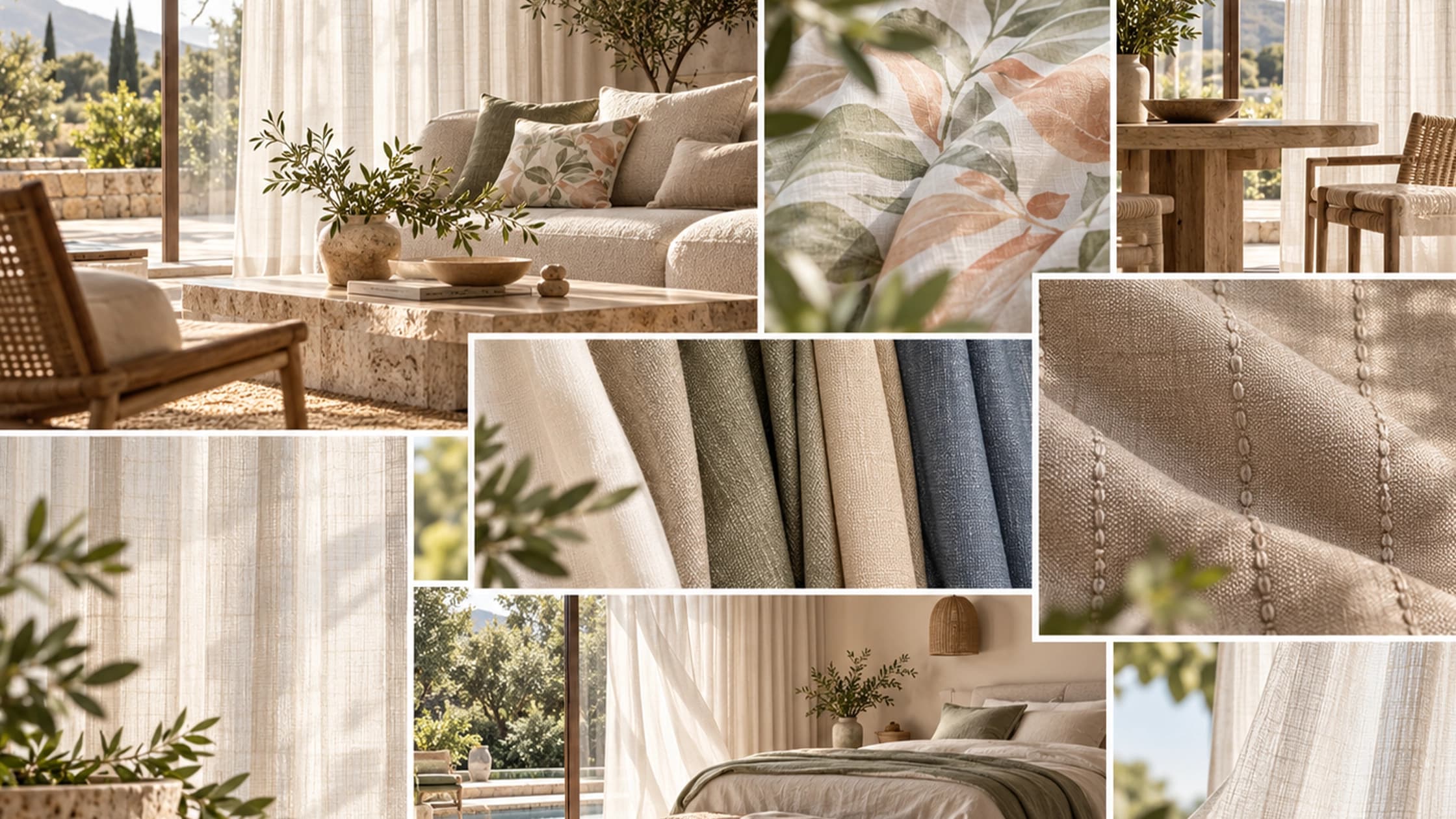
The fabrics below span natural, recycled and blended compositions. All five are OEKO-TEX certified and ethically made. OEKO-TEX certification indicates that the textile has been tested for specified harmful substances though it should not be interpreted on its own as proof that a fabric is environmentally sustainable. Our fabric Verdant additionally holds ISO 14001 certification, which relates to an organisation’s environmental management system.
Fabric | Composition | Best for | Sustainability feature |
Ingrid | 100% cotton | Natural-fibre curtains | Renewable, biodegradable fibre |
100% linen | Natural-fibre sheer curtains | Natural fibre and durability | |
100% recycled polyester | Recycled sheer curtains | 100% recycled content; ISO 14001 | |
100% recycled polyester | Textured recycled sheers | 100% recycled content | |
58% recycled polyester / 30% polyester / 12% linen | Linen-look drapery | Majority recycled composition with natural linen texture |
Ingrid — 100% Cotton
Best for: Customers looking for a natural-fibre curtain with a painterly floral design.
A painterly floral design with soft, watercolour-style detailing, suited to both classic and contemporary interiors. As a natural fibre, cotton is renewable and biodegradable at the end of its lifecycle. The fabric is machine washable.

Calais — 100% Linen
Best for: Customers looking for a natural, durable sheer curtain.
A 320cm continuous sheer with a relaxed, slubbed texture and a neutral colour palette, providing filtered light. Linen is derived from flax and is recognised for its durability, which can help extend the usable life of the fabric.

Verdant — 100% Recycled Polyester
Best for: Customers prioritising recycled content and easy-care sheer curtains.
A sheer fabric with a fluid drape, available in pastel and neutral tones at 317cm width. Made from 100% recycled polyester, Verdant helps reduce demand for virgin polyester by using recycled material as its fibre source. The fabric is machine washable, fire retardant, and additionally holds ISO 14001 certification.

Savira — 100% Recycled Polyester
Best for: Customers wanting a more substantial sheer with 100% recycled polyester content.
A wide-width, open-weave sheer with a heavier-weight construction, offering a more substantial drape. It is made from 100% recycled polyester and is machine washable and fire retardant.

Mirezo — 58% Recycled Polyester / 30% Polyester / 12% Linen
Best for: Customers wanting a natural linen aesthetic with majority recycled content.
A linen-blend fabric suited to full-length drapery, with subtle tonal variation. The composition combines 58% recycled polyester with natural linen for texture and virgin polyester for performance. It offers a balance of recycled content, natural texture and practical performance rather than being fully recycled or fully natural.

Which Curtain Fabric Is the Most Sustainable?
There is no single “most sustainable” curtain fabric for every customer because different compositions address different priorities.
100% natural fibres: Ingrid and Calais
These are the strongest options in this range for customers prioritising renewable, biodegradable fibres. Durability is also relevant: choosing a fabric that performs well over a long period can reduce the need for frequent replacement.
100% recycled fibres: Verdant and Savira
These are the strongest options in this range for customers prioritising recycled content. Both are made from 100% recycled polyester, reducing reliance on virgin polyester. They do not biodegrade, so they address a different environmental priority from cotton and linen.
Majority-recycled blend: Mirezo
Mirezo combines 58% recycled polyester with 30% polyester and 12% linen. It does not achieve full recycled content or full biodegradability, but it provides majority recycled content alongside the natural texture of linen.
When comparing sustainable curtain fabrics, consider composition alongside durability, manufacturing processes, certifications, care requirements and expected lifespan. No single fabric in this range satisfies every sustainability criterion simultaneously.
How to Choose Sustainable Curtains for Your Home
For natural, biodegradable fibre options: Ingrid (100% cotton) or Calais (100% linen).
For maximum recycled content within this range: Verdant or Savira (both 100% recycled polyester).
For a natural linen aesthetic with majority recycled content: Mirezo (58% recycled polyester / 30% polyester / 12% linen).
The right choice depends on your priorities for appearance, performance, care, durability and environmental impact.
How to Make Your Curtains Last Longer
Besides composition, appropriate care can extend the usable life of curtain fabric —an important way to reduce the need for replacement.
- Follow the specific care guidance for each fabric. Verdant, for example, is designed for machine washing at 60 degrees; always check individual care instructions before washing.
- Dust and air curtains regularly. Light vacuuming or shaking out can help maintain the appearance of cotton, linen and synthetic fabrics between washes.
- Limit unnecessary prolonged direct sun exposure where practical, as UV exposure can affect colour and fibres over time.
- Prioritise quality and durability. Choosing curtains that suit the room and can remain in use for longer reduces the frequency of replacement.

Frequently Asked Questions About Sustainable Curtains
What is the most eco-friendly fabric for curtains?
There is no single fabric that is most eco-friendly in every situation. Linen and cotton offer renewable, biodegradable fibre options, while recycled polyester prioritises recycled content and reduced reliance on virgin polyester. Consider durability, production, care and expected lifespan as well as composition.
Are linen curtains sustainable?
Linen is a natural, renewable and biodegradable fibre and is known for durability. Its overall environmental impact also depends on factors such as cultivation, processing, manufacturing, transport and lifespan.
Are cotton curtains eco-friendly?
Cotton is a natural, renewable and biodegradable fibre, but its environmental profile varies according to how it is grown and processed. Fibre composition is therefore only one part of assessing a curtain’s sustainability.
Is recycled polyester good for curtains?
Recycled polyester can be a practical curtain material because it can offer durability and easy care while using recycled rather than entirely virgin polyester. It does not biodegrade, so its sustainability benefits differ from natural fibres such as linen and cotton.
Are recycled polyester curtains sustainable?
Recycled polyester curtains can support sustainability goals by using recycled material and reducing demand for virgin polyester. Their overall impact also depends on manufacturing, durability, care and end-of-life considerations.
Is linen more sustainable than polyester?
The answer depends on which sustainability factors matter most. Linen is natural, renewable and biodegradable, while recycled polyester uses existing material and can reduce reliance on virgin polyester. Comparing the full lifecycle provides a more useful picture than fibre type alone.
How can I make my curtains last longer?
Follow the fabric-specific care instructions, remove dust regularly, minimise unnecessary UV exposure and choose a fabric suited to the room and intended use. Extending the life of curtains can reduce how often they need to be replaced.
Explore Sustainable Curtain Fabrics at Curtain Studio
Sustainability in curtain fabric composition is not a single, uniform standard. Whether your priority is the renewable and biodegradable qualities of natural fibres, recycled content in polyester, or a balance of both, Curtain Studio's range offers several approaches to consider.
Explore Curtain Studio’s natural and recycled curtain fabrics online, visit a Curtain Studio store to see and feel the fabrics in person, or book a consultation with a window furnishing specialist for help choosing curtains to suit your home, style and sustainability priorities.