How to Layer Curtains and Blinds | The Complete Guide
Learn how to layer curtains and blinds for better insulation, privacy and style. Compare the best combinations, plus readymade and custom options from Curtain Studio.
Quick AnswerYes — you can layer curtains and blinds on the same window, and it's one of the easiest ways to improve insulation, privacy, light control and style in a New Zealand home. The most popular combinations are:
Whether readymade or custom-made suits you best depends on your window size, budget and how tailored you want the finished look. |
|---|
Why Layer Curtains and Blinds?
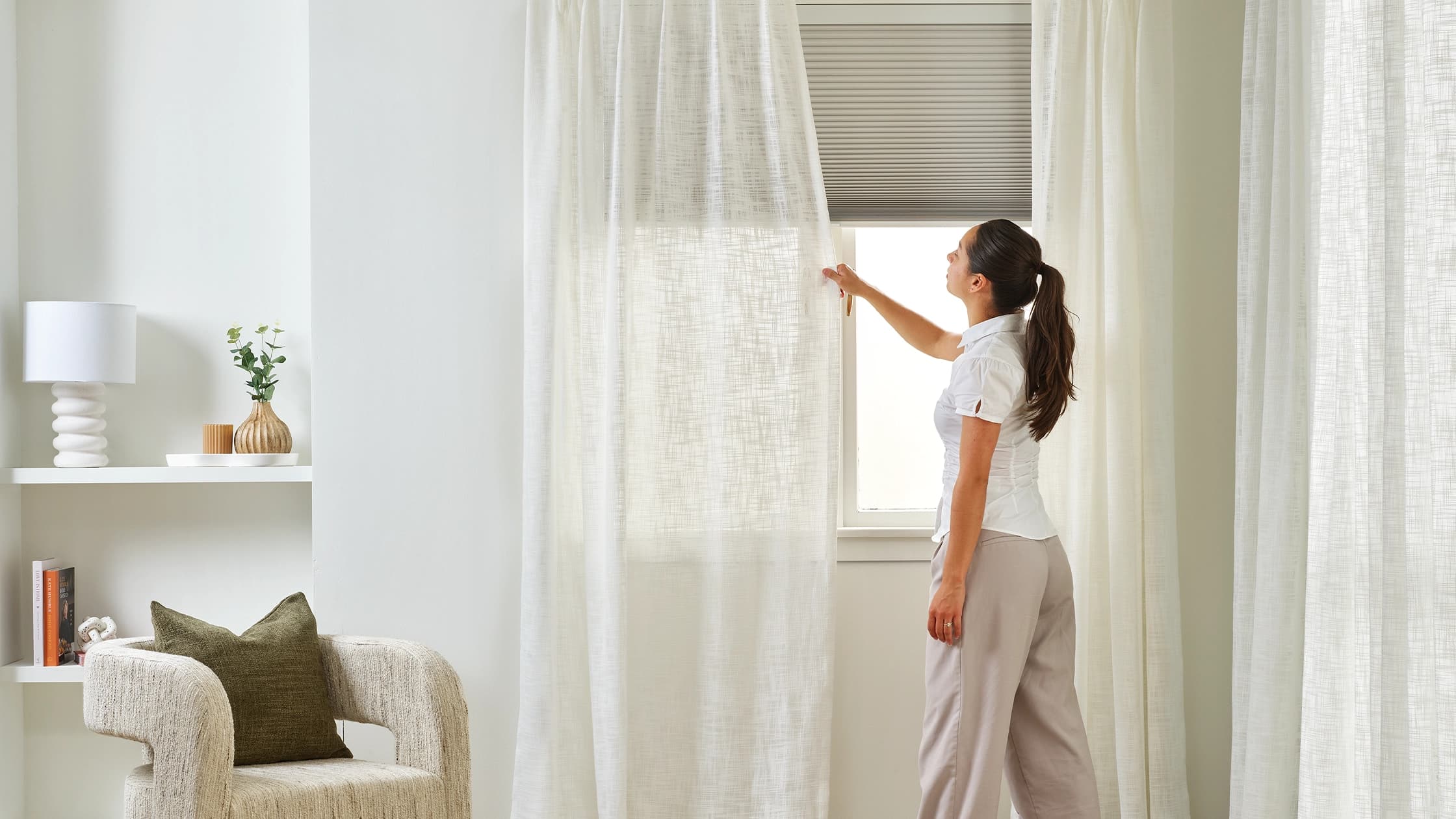
Layering combines the strengths of both products: a blind fitted close to the glass for light control, and a curtain in front for softness, insulation and privacy. Here's what it does for a home:
- Better insulation: windows are the biggest source of heat loss in most NZ homes. Well-fitted curtains and blinds can cut heat loss through single-glazed windows by around 60%, and 40–50% through double glazing, according to the Energy Efficiency and Conservation Authority (EECA). Layering traps an extra pocket of still air between blind, curtain and glass, which is what does the insulating.
- Flexible light control: A sheer or light-filtering layer softens midday sun without blacking out the room, while a blockout layer gives full darkness for sleeping or movie nights.
- Layered privacy: Sheers maintain daytime privacy while still letting light in; close the heavier layer at night for full privacy.
- UV protection and acoustics: A second layer absorbs extra UV, helping protect floors and furniture from fading, and heavier fabrics help dampen street noise and room echo.
- A premium finish: Layering adds texture and depth for a tailored, hotel-quality look — one reason interior designers default to it for feature windows.

Best Curtain and Blind Combinations
The right pairing depends on the room, the direction the window faces and how much light control or insulation you need.
Combination | Best For | Light Control | Insulation |
Sheer curtains + blockout roller blinds | Bedrooms, media rooms, street-facing windows | Excellent — total darkness on demand | Very good |
Curtains + honeycomb blinds | Cold rooms, south-facing windows, home offices | Good, with full blockout options available | Best-in-class (trapped air pockets) |
Roman blinds + curtains | Feature windows, formal living & dining | Good | Very good (close frame fit) |
Blockout curtains + sunscreen roller blinds | Home offices, TV rooms, west-facing windows | Excellent — glare control by day, full blockout by night | Good |
1. Sheer Curtains + Blockout Roller Blinds
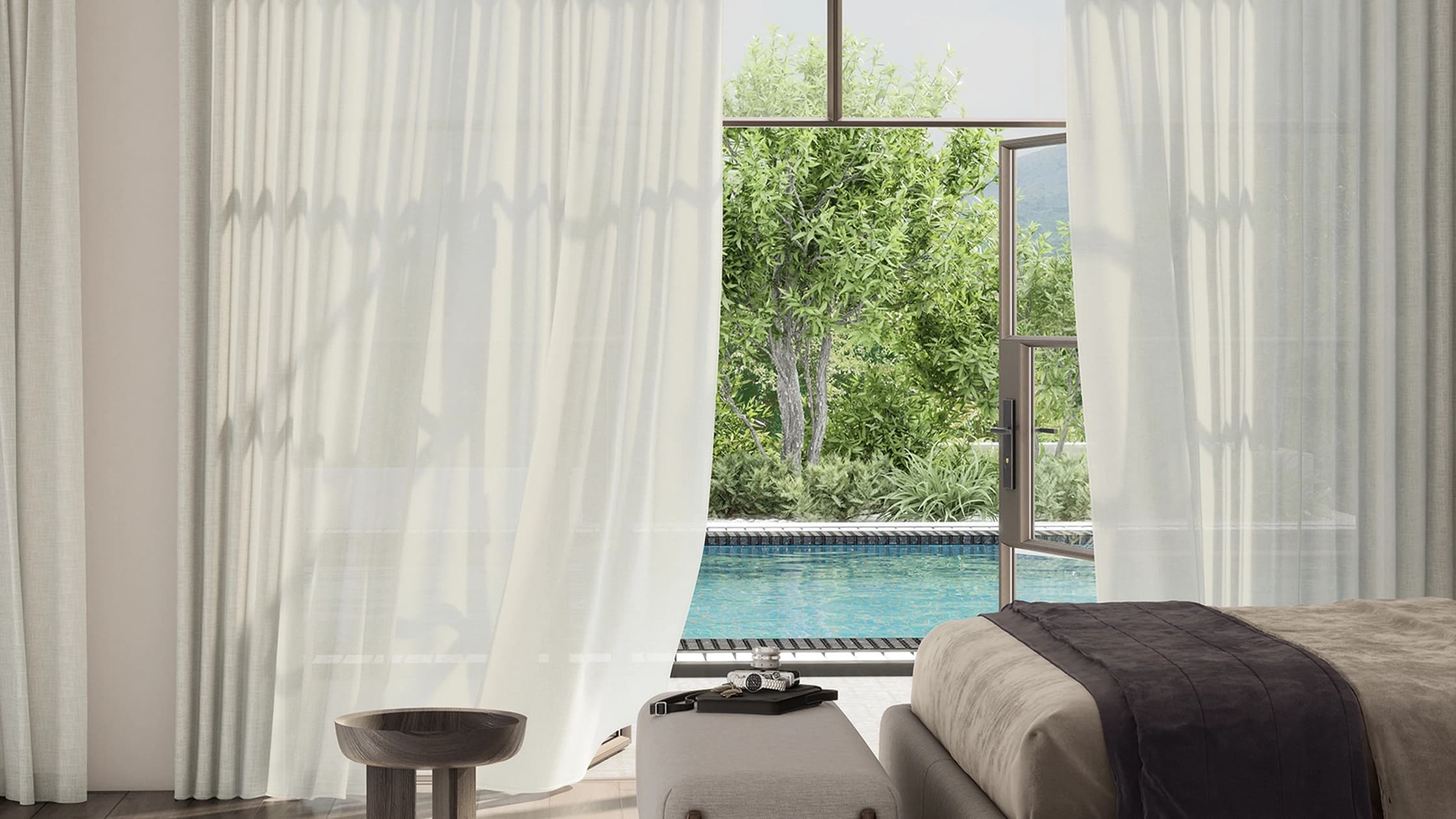
Swap a light-filtering roller for a blockout roller and you keep the soft daytime look with true darkness on demand — ideal for bedrooms, media rooms and street-facing windows.
Shop the look: Readymade Blockout Roller Blinds · Studio Range Readymade Sheers

2. Curtains + Honeycomb Blinds
Honeycomb (cellular) blinds trap air in a distinctive tube structure, making this the best-performing combination for insulation — ideal for cold, south-facing rooms or home offices where you're trying to cut heating costs.
Shop the look: Sonoma Cellular/Honeycomb Blind Range · Studio Custom Curtains — lined fabrics

3. Roman Blinds + Curtains
Roman blinds sit close to the frame for a tailored, structured look, while curtains add softness and drape. Both are available in fabric, so you can mix textures, patterns or complementary colours for a fully customised finish.
Shop the look: Studio Custom Roman Blinds · Readymade Roman Blinds

4. Blockout Curtains + Sunscreen Roller Blinds
A sunscreen blind cuts glare and UV while keeping the outside view, and a blockout curtain behind it can be drawn for full privacy or evening screen glare. Best for home offices, TV rooms and west-facing windows.
Shop the look: Madison Readymade Sunscreen Roller Blind · Preston Blockout Curtains (Essentials, readymade)

Which Rooms Should You Layer?
Room | Recommended Combination |
Living room | Roller blind + sheer curtains |
Bedroom | Blockout roller blind + thermal-lined curtains |
Dining room | Sheer curtains + roller blind |
Home office | Sunscreen roller blind + curtains |
How to Layer Curtains and Blinds Correctly
- Fit the blind first, closest to the glass — ideally recessed inside the frame, or mounted just outside it.
- Hang the curtain in front on its own separate track or rod, set further out from the wall.
- Leave enough clearance between layers so the blind can be raised and lowered without catching the curtain.
- Extend the curtain track 15–20cm beyond each side of the frame so curtains stack back fully off the glass during the day.
Common mistakes to avoid: hanging both layers on one track (makes the blind hard to operate), choosing curtains that stop short of the floor (a snug, floor-length curtain is what actually blocks draughts), and mounting the blind too far from the glass (a gap lets a convection current form, reducing the insulating effect).
Readymade vs Custom: Which Is Better for Layering?
Readymade
- Ideal for standard-sized windows
- Easy to install yourself
- Budget-friendly
- Great for quick room updates or rentals
Custom
- Made to fit any window perfectly, including oversized or awkward shapes
- Professionally measured on-site
- More fabric, colour and lining options
- Best for feature windows and premium finishes
Many homeowners mix the two — custom curtains on feature windows in the living room, readymade blinds and curtains in bedrooms and secondary spaces — to balance style and budget.
What Does It Cost to Layer Curtains and Blinds?
Layering costs more than a single covering, since you're buying two products per window. Readymade sheers or roller blinds are the most budget-friendly way to try it, while custom curtains with a thermal lining paired with a custom blind sit at the premium end. Book a free in-home measure and quote for an accurate price based on your windows, fabric choice and finish.
Frequently Asked Questions
Can you have curtains and blinds on the same window?
Yes. Mounting a blind close to the glass and a curtain on a separate track in front is a standard, well-supported approach used throughout New Zealand homes.
Should curtains go over roller blinds?
Yes — the roller blind sits closest to the window, and the curtain hangs in front on its own track, so each layer opens and closes independently.
Are layered window furnishings worth it?
For most homes, yes. Beyond the style benefit, EECA data shows well-fitted curtains and blinds can cut heat loss through windows by up to 60% for single glazing — a genuinely warmer room and lower winter power bills.
Do you need two separate tracks to layer curtains and blinds?
Yes, in almost all cases. A blind and a curtain track or rod are independent fittings, which is what allows each layer to be operated separately.
What blind works best under curtains for warmth?
Honeycomb (cellular) blinds perform best for insulation, since their air-pocket structure traps still air against the glass; a snug-fitting roman blind is a close second.
Ready to Layer Your Windows?
Whether you're updating a single bedroom with readymade curtains and blinds or creating a fully customised look throughout your home, Curtain Studio has a solution to suit every style and budget.
Book a free measure and quote, shop online, or visit your nearest Curtain Studio store.